
Urban bird lovers.
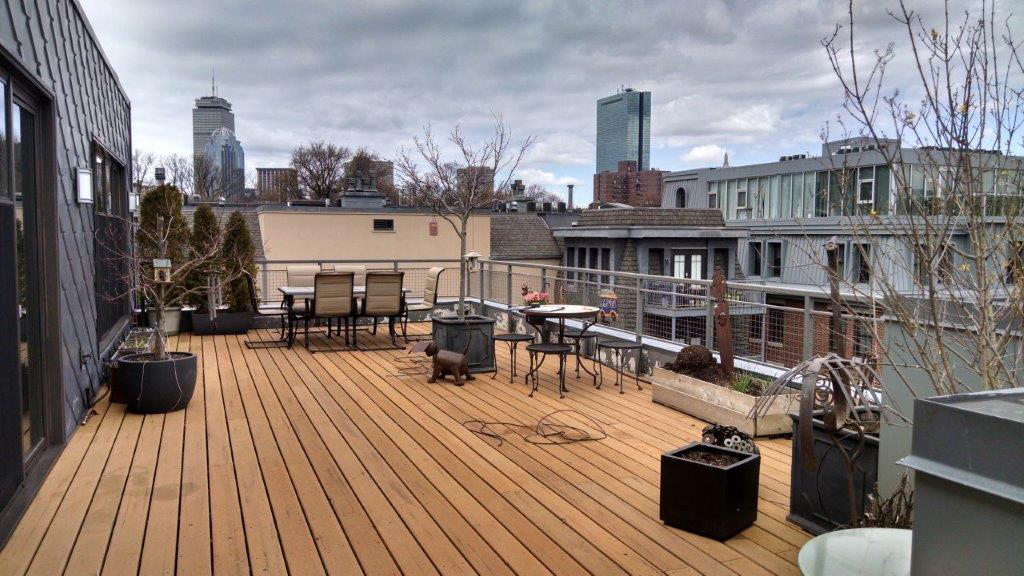
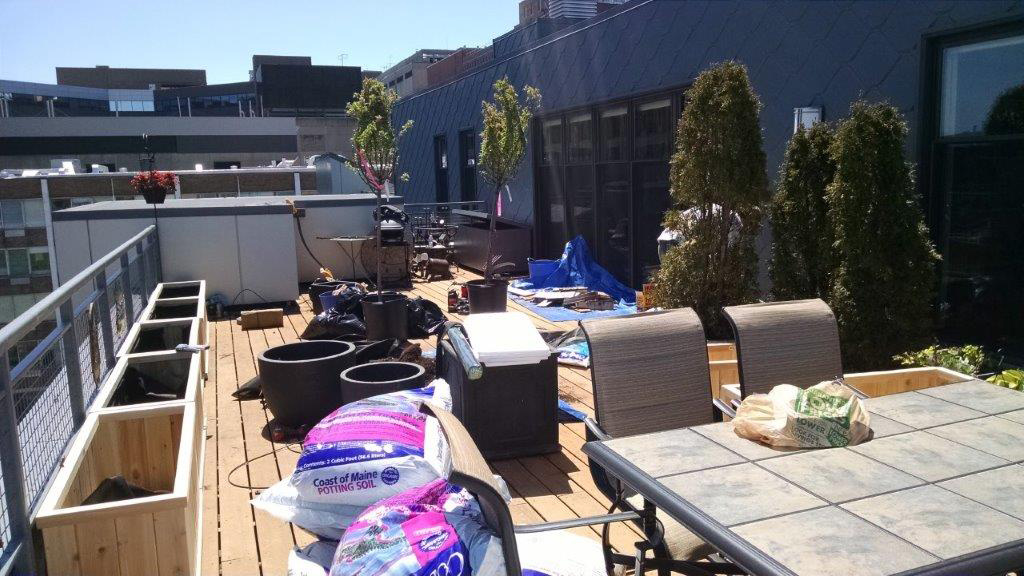
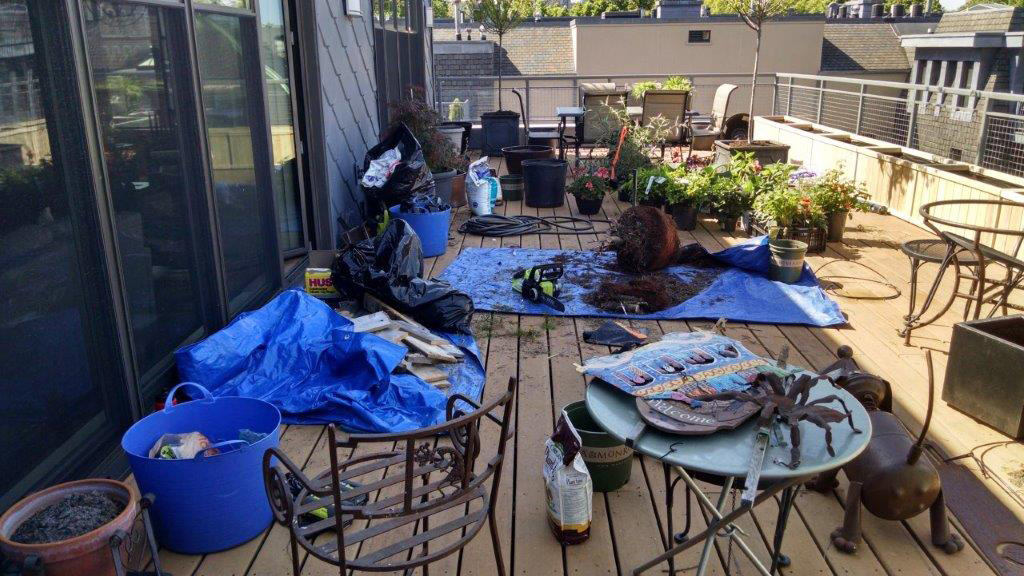
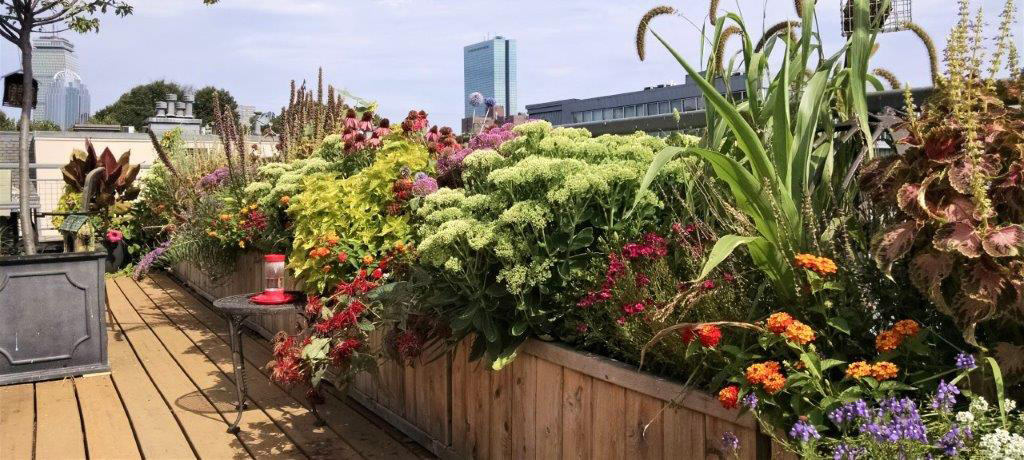
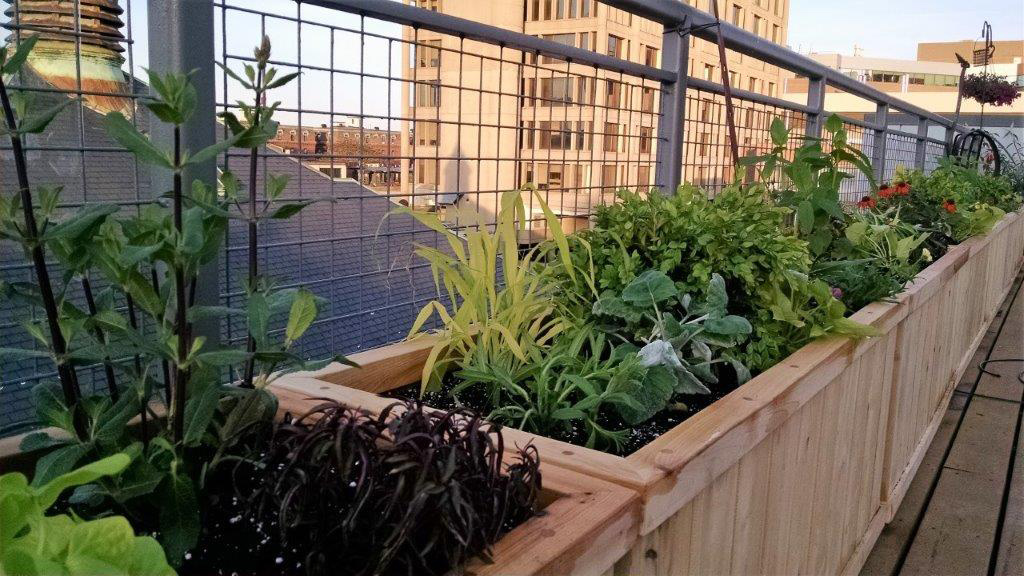
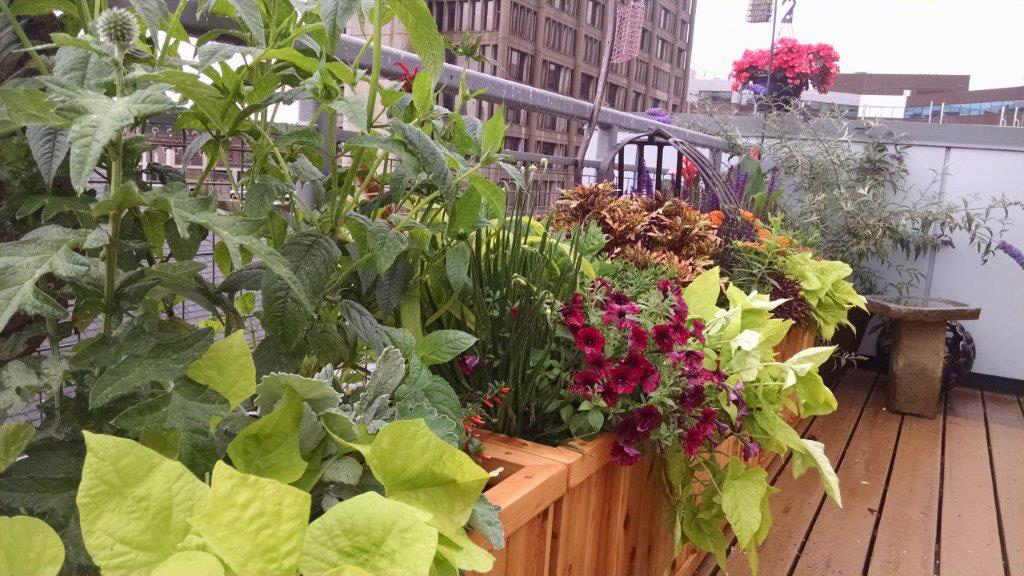
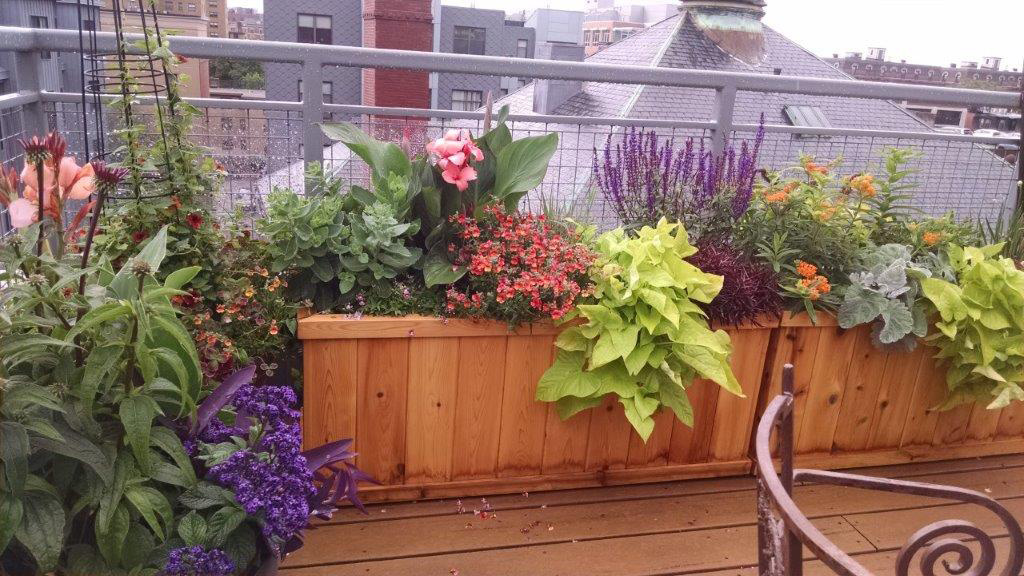
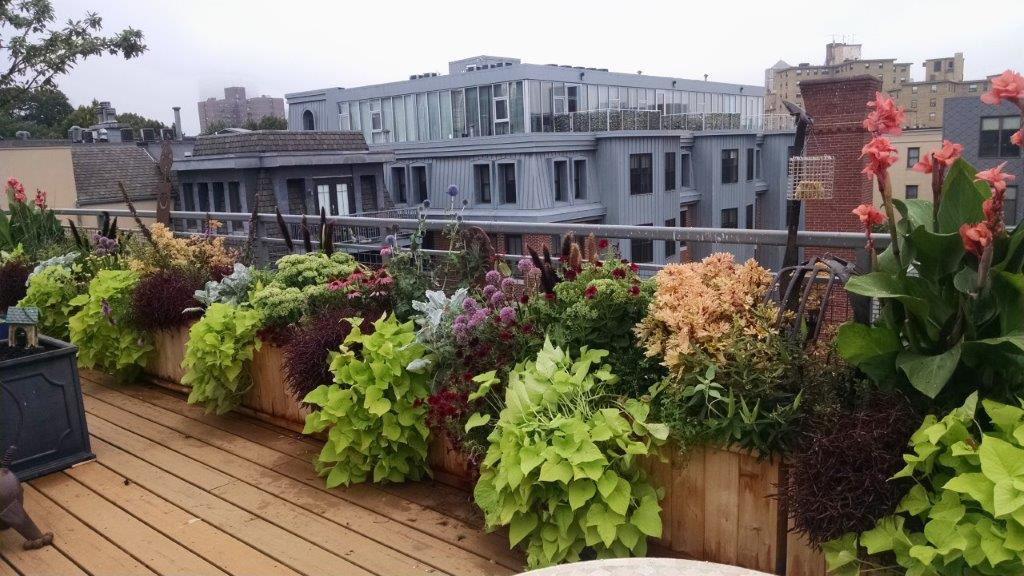
These clients were avid bird lovers and wanted a space that was attractive to their winged friends, despite the fact they lived five stories up in the heart of downtown Boston! They had bird feeders, but we encouraged them to attract even more birds with perennials. We added cedar planters around the perimeter of the deck and planted perennials like bee balm, thistle, butterfly weed, salvia and lobelia which were sure to draw in a crowd and they did. Two crabapples ‘Coralburst’ were chosen for their small size as well as small fruit, which is more edible for the birds.
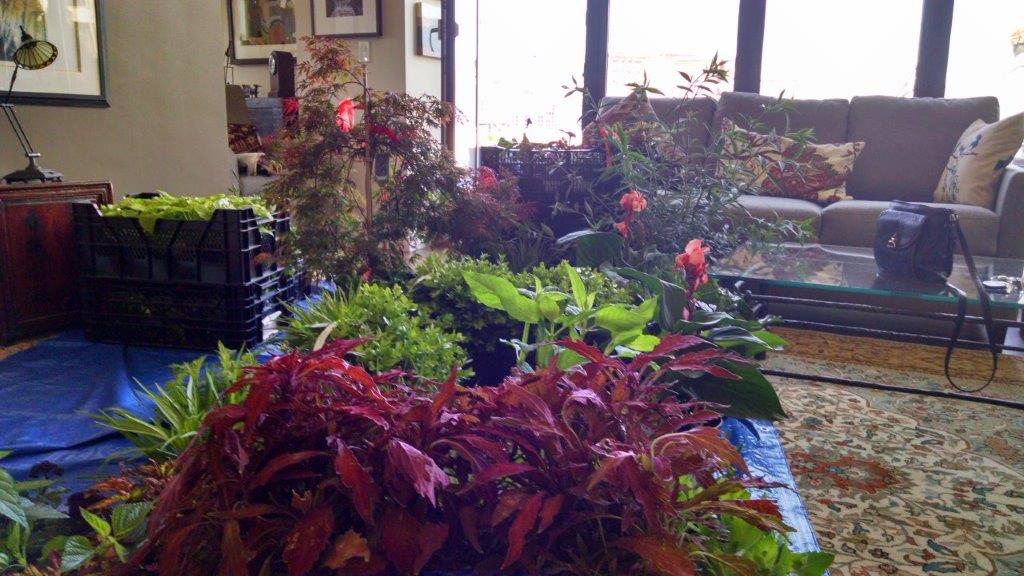
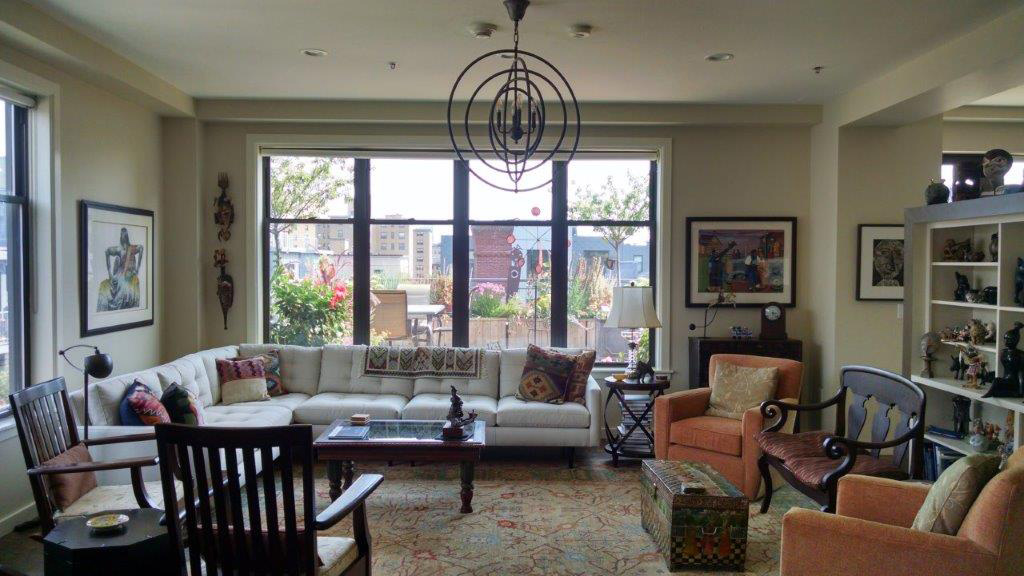
Our clients loved color and had a sense of fun so we made sure that the colors we used outside would complement the décor INSIDE the condo.
The day of installation was hot but we thought the end result was pretty cool. And based on the amount of wildlife visiting the deck we weren’t the only ones!

Tropical punch.
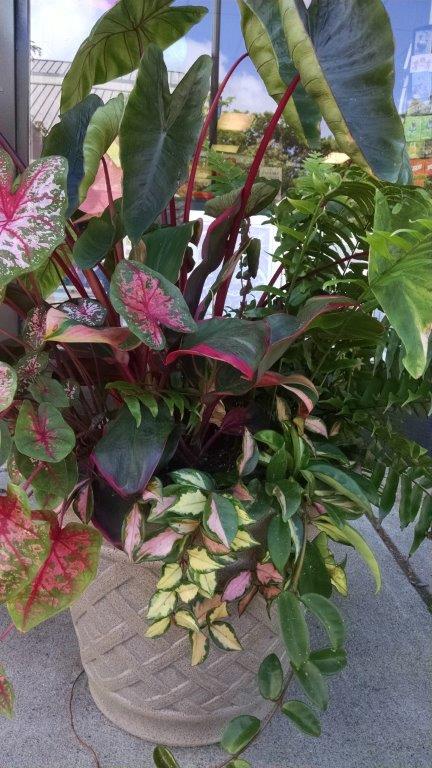
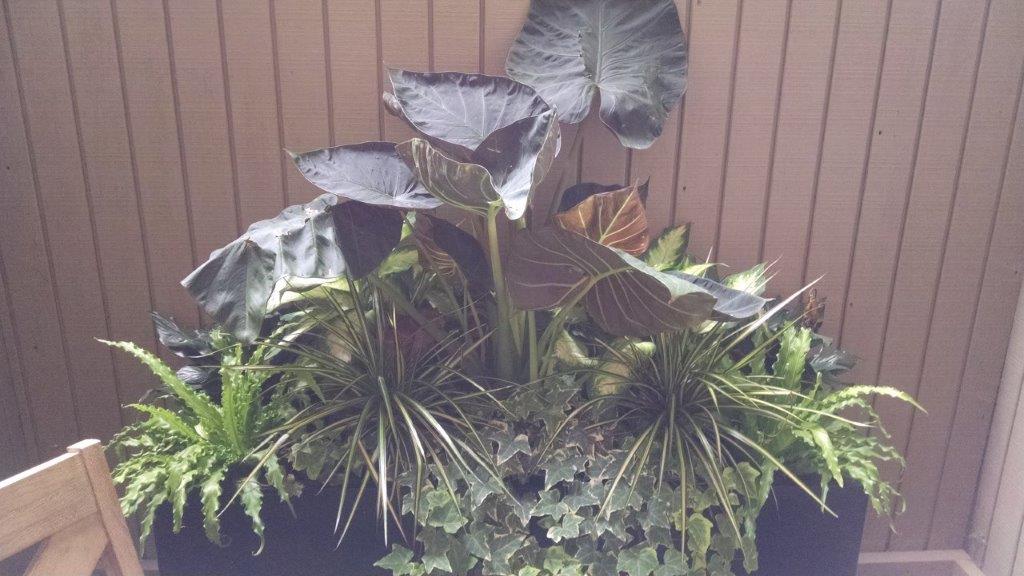
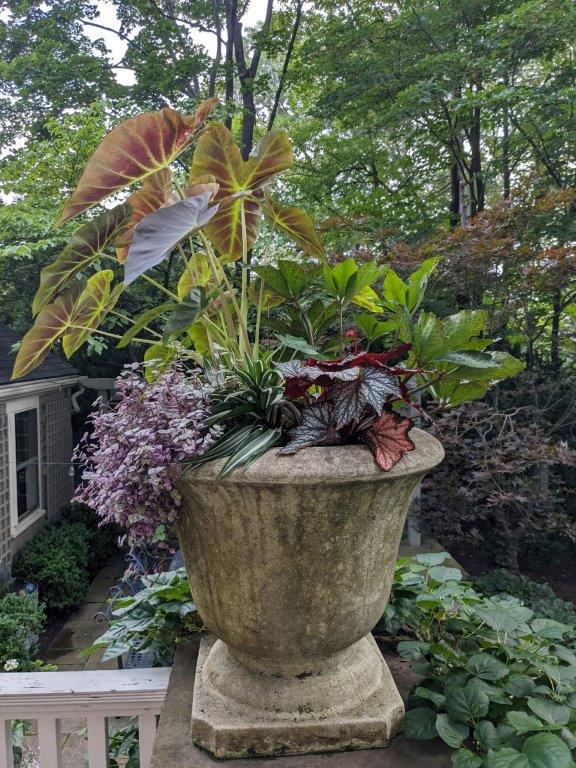
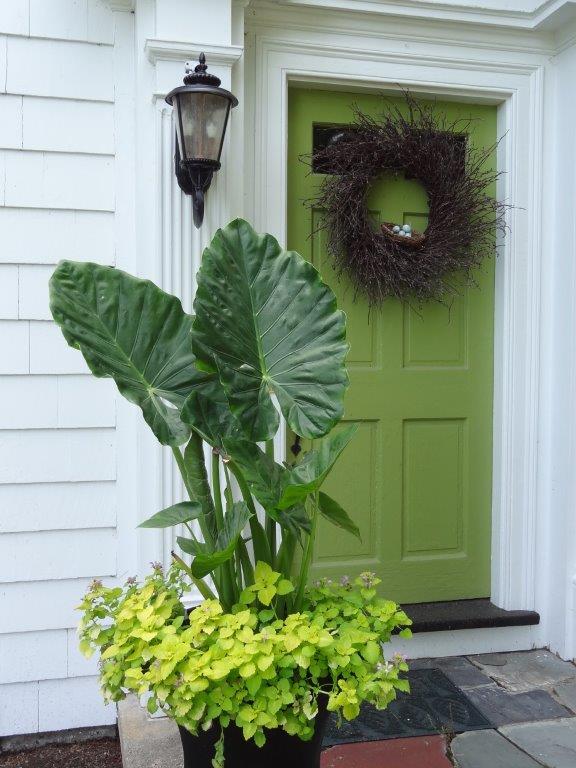
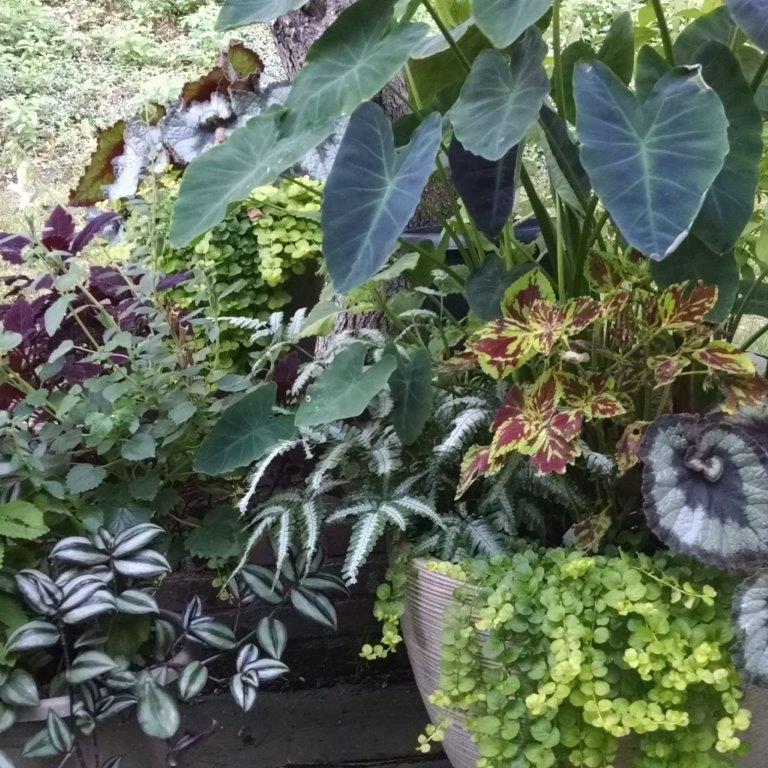
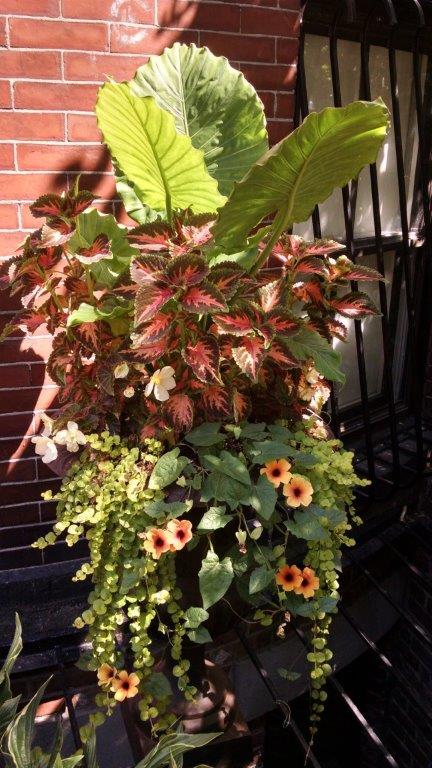
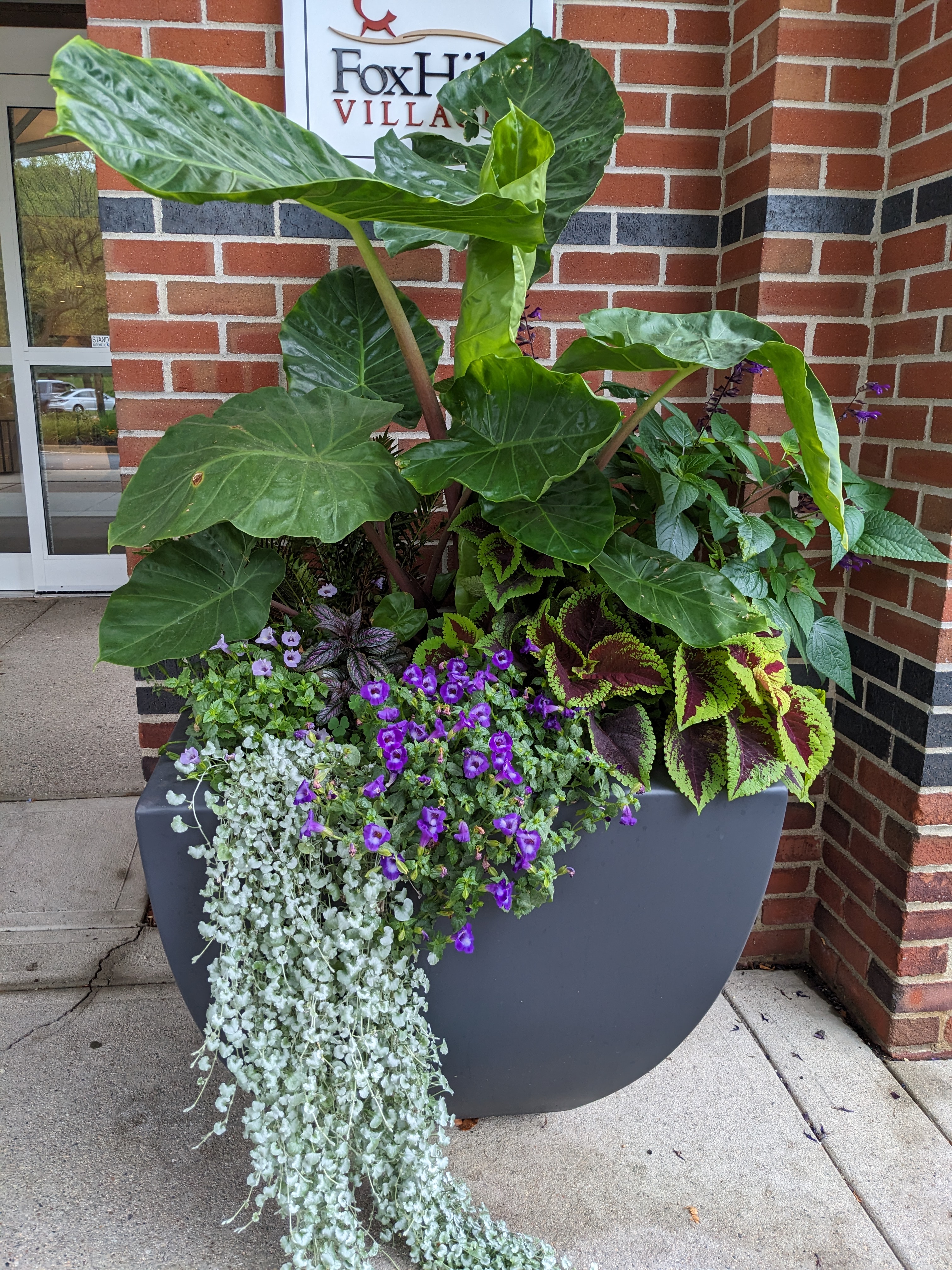
I LOVE elephant ears (Alocasia, Colocasia and Xanthosoma). I mean I REALLY love them. Maybe because I am a huge fan of foliage and you can’t beat their beautiful large, heart-shaped leaves which can be black, purple, emerald green, chartreuse, yellow, or a mix of colors. Even the stems deliver impressive colors.
Elephant ears always play a predominant role in my summer containers and the favorites get to spend the winter in my daughter’s (now empty) bedroom.
Alocasia and Colocasia are native to tropical southern Asia, Indonesia, New Guinea and parts of Australia, while Xanthosoma is native to tropical America. They are often grown for their edible, starchy corms or tubers. The leaves are also edible but, like the corms and tubers, need to be cooked as the plant contains needle-like crystals of calcium oxalate which are a skin irritant. If you are wondering how to tell Alocasia and Colocasia apart here’s a tip that works most of the time: Alocasia’s leaves usually face pointed end up (like an A), while Colocasia leaves usually face pointed end down. Alocasia typically has leaves that are shinier, while Colocasia leaves are matte or glossy.
Elephant ears play a major role on my back patio which is mostly shaded but they will also grow in filtered sun, provided they have enough moisture. In general greener types can take higher light levels. I find that the yellow-stemmed ‘Lutea’ prefers indirect light, so the leaves don’t scorch. Elephant ears like moisture and will grow very well at water’s edge. While fertilizing is not necessary, the more you water and fertilize the more they will grow. Currently on my patio I am enjoying ‘Calidora’, ‘Hilo Beauty’, ‘Metalhead’, ‘Lutea’ and ‘Frog in a Blender’. I am missing ‘Regal Shield’, a favorite from last year, which is a darker-leaved variety with beautiful veining. ‘Hawaiian Punch’ is another cool choice with pink
veining and stems.
They say that an elephant never forgets but trust me you will never forget elephant (ears) once you design with them.
The happiest day.
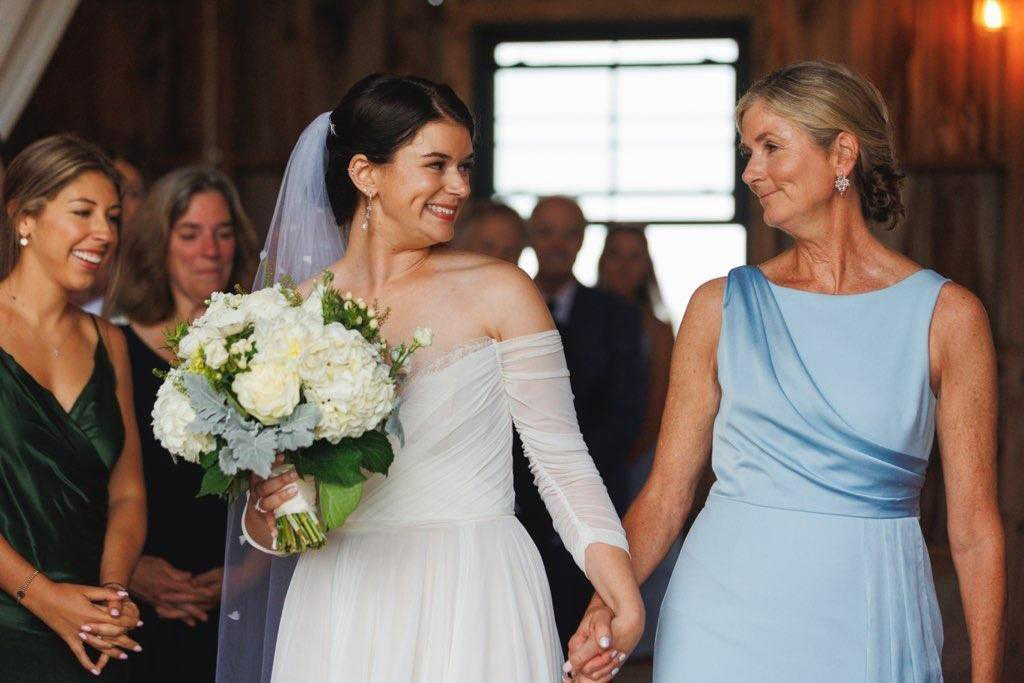
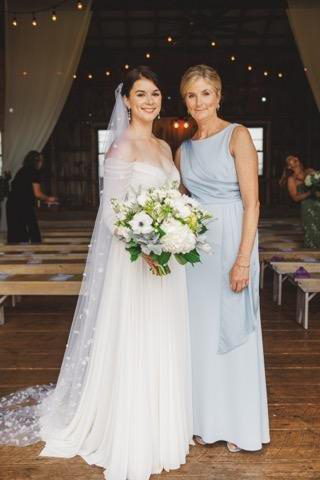
One reason I have not really blogged since February (!) has to do with my daughter’s wedding at the end of June. Between engagement parties, bridal showers, dress fittings, venue visits and tastings, March, April, and May were chocked full.
June 24th dawned a bit drizzly, but nothing could have marred the mood. Guests commented that the word that came to mind was “joy”, and I couldn’t agree more. I designed some of the florals but left the heavy lifting to Season’s Downeast Designs in Maine. The beautiful barn at Harmony Hill Farm was the most perfect setting. If you are on Instagram check out their page for a quick video of the day.
At the end of the night I asked my daughter’s husband what he would change and he said “Nothing.”
I agree.










An escalator in my garden.
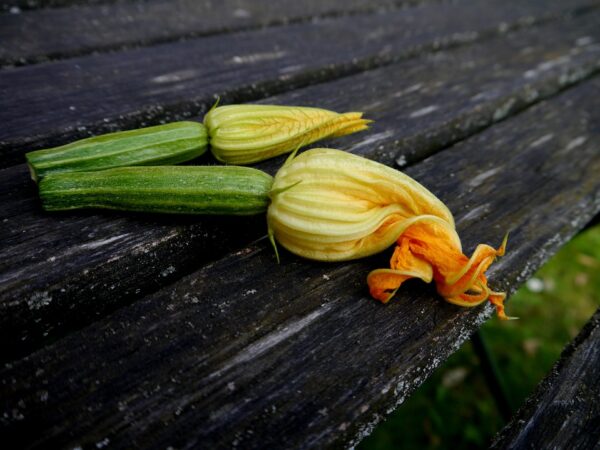
I have many memories of time spent as a child weeding our vegetable garden. I’m not necessarily saying they were good ones. My mom and dad were great gardeners but at that stage my siblings and I would have rather played Pac Man. One year my parents decided to put us in charge of the weeding. We ended up mowing the weeds that carpeted the rows between the vegetables! Amazingly enough we had a great harvest that year.
While I wasn’t a fan of weeding, I was a fan of vegetables, especially zucchini. My mom would make zucchini bread, zucchini soup, zucchini cookies and of course my favorite, stuffed zucchini. My home has plenty of room to garden but my sunniest spots have already been planted with flowers. I have had some veggies – like tomatoes and peppers – in pots but I would love to try zucchini. If only I had room.
Enter Incredible Escalator, a climbing zucchini from Renee’s Garden. I am so excited as this space-saving climbing zucchini will look beautiful scrambling over the arbor in my cutting garden. It will have to share some space with the Major Wheeler honeysuckle but I’m sure it will be fine. This climbing zucchini is the answer for those who might be spatially challenged and I can easily imagine it being used for some of my roof garden clients. The packet of seeds is ready to go but I will need to wait to plant until things really warm up and night temperatures are over 55 degrees. Giving the plants some compost and full sun will allow me to harvest in about 58 days. And enjoy zucchini bread in 59 days! Now I am more anxious than ever for spring.
2023 Perennial Plant(s) of the Year.
Drumroll please……the Perennial Plant Association’s Perennial of the Year is… Rudbekia ‘American Gold Rush’. Now to be honest, I am not a huge fan of black-eyed Susans because, in my experience, they seem to self sow EVERYWHERE. If I use them in a design they act like they to want to take over the design. ’American Gold Rush’ might have me re-thinking my former prejudice. This black-eyed Susan, which was also an AAS 2020 winner, is a shorter, more compact, dome-shaped plant. ‘American Gold Rush’ gets about 22” high by 40” wide and is hardy in Zones 4-9. It prefers full to part sun and will look beautiful in a perennial border or meadow planting. Its flowers, which are a bit lighter in color than the typical Rudbekia, are frequented by butterflies and pollinators and the seed heads are loved by birds. The seed heads also provide winter interest in the garden.
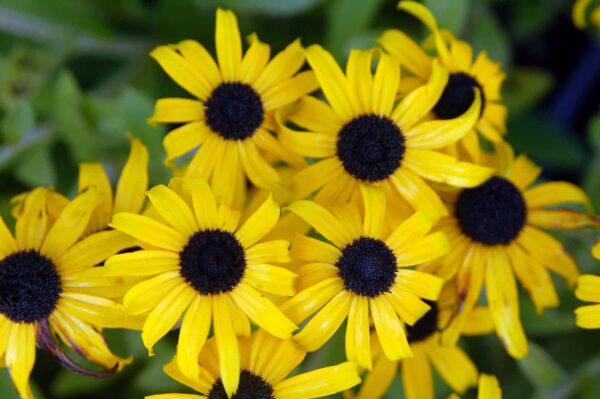
Best of all the thinner, hairier leaves of ‘American Gold Rush’ make the plant more resistant to Septoria leaf spot. Rudbekia’s susceptibility to this fungal disease is another reason I have not been a huge fan. This hybrid shows no sign of the fungus even in wetter conditions. I am happy to admit when I am wrong and it seems that ‘American Gold Rush’ might have me taking a second look at Rudbekias.
I am not wrong, however, when it comes to a penchant for great foliage. Many of you may have heard me speak about it during my talk “Look Ma, No Flowers” (for other presentation topics click here). When it comes to great foliage for your garden or container you cannot beat heuchera. I am especially enamored with heuchera ‘Wildberry’, which happens to be the Proven Winners National Perennial of the Year.
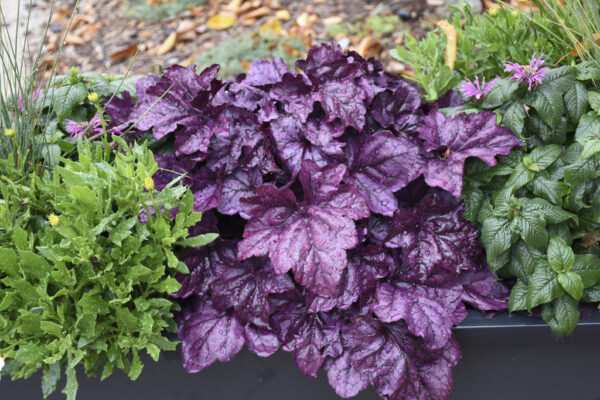
‘Wildberry’, which is part of the Dolce series, features large, scalloped, dark purple leaves with charcoal veining. It has white flowers that are covered with rosy pink calyxes but honestly with the gorgeous purple color the flowers are secondary – although the hummingbirds find them irresistable! ‘Wildberry’ gets about 14” high and 20” wide and performs equally well in sun or shade although I have found that, like many coleus, heuchera color better with some sun. Others in the Dolce series I have tried and loved include ‘Spearmint’ and ‘Cherry Truffles’. ‘Wildberry’ is a beauty I have used successfully in my gardens and containers.
Follow Us!