
Your roots are showing.
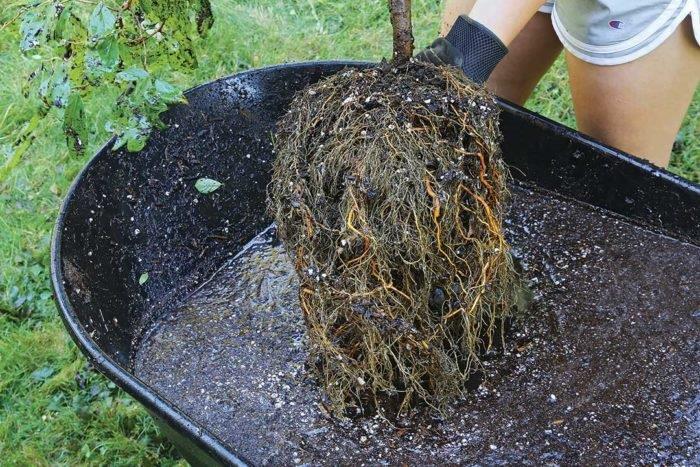
Root washing is turning the traditional way of planting trees and shrubs on its head. The procedure involves taking a tree or shrub, either container grown or B&B, and gently washing the soil from the roots. Why? Removal of soil allows the roots to be clearly seen. As a result any girdling, or circling roots can be removed. Girdling roots happen when material is grown in a container or B&B for too long. Roots cannot grow outward so they begin to circle. Because of “root memory” they continue to do so even when transplanted. Girdling roots can end up strangling a tree. Removal of girdling roots will give any new transplant a better start. Trunk, or root, flare (which is where the first main roots attach to the trunk) is also more easily seen when soil is removed by root washing. Since many trees die because they are planted too deeply identifying the flare is crucial to success. Additionally by removing the medium around the root ball you allow the roots to adjust to their new home immediately without having to travel across the “interface” zone. This is the area between the root ball soil, which is typically clay, and the backfill soil. Roots do not easily pass from one type to the other.
This all seems to make sense to me and I confess I have always removed burlap when planting trees despite being told I shouldn’t.
A tough invasive to swallow.
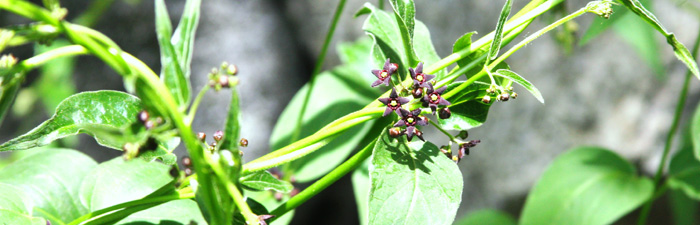
Black swallow-wort (Cynanchum louiseae) is an invasive perennial vine that can grow up to 8 feet tall. If it has nothing to climb on it will tangle around itself creating thick ropes which makes its common name – “dog-strangling vine”- understandable. Black swallow-wort has opposite green leaves and small purple five-petaled flowers. It produces long green pods in late July like other plants in the milkweed family. Seeds from these pods are dispersed by the wind.
Black swallow-wort can grow in sun or shade and is allelopathic which means its roots release a compound that inhibits the growth of nearby plants. Black swallow-wort can also be harmful to Monarchs as they sometimes lay their eggs on the milkweed look-alike only to have the larvae starve once they hatch.
Black swallow-wort is difficult to control. If you plan to dig the plant up, make sure you get as much of the root crown and rhizomes as possible otherwise it will re-sprout. Bag the plants and dispose of properly as seed pods can still form even when out of the ground.
Watercolors.
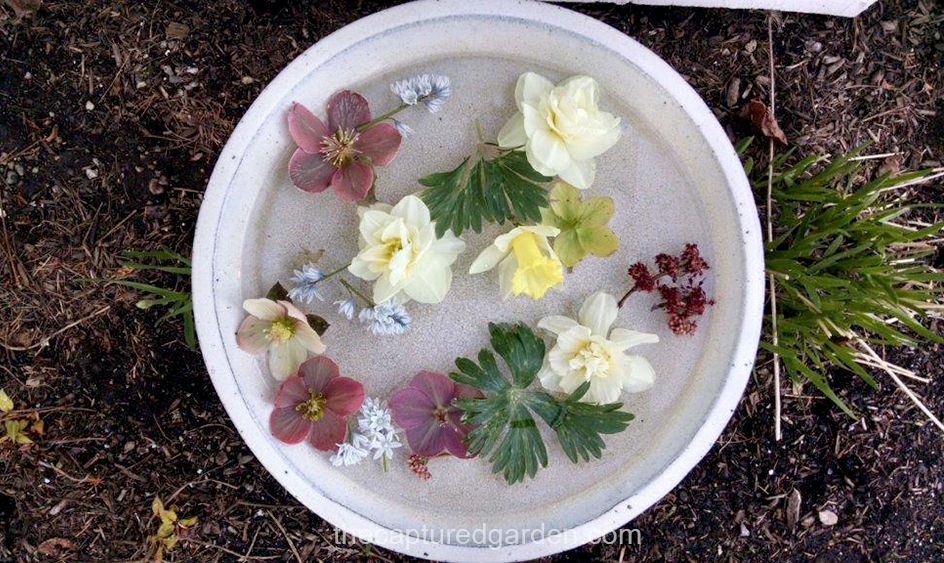
I was so excited to find this sweet birdbath a few years ago and promptly placed it in my perennial garden. Unfortunately the birds did not seem to like it. Maybe its location – near a side door – was too busy for them. However, I loved the way it looked in the garden and was determined that it would not sit empty. After a trip to Chanticleer Garden I was inspired. My birdbath would no longer be a birdbath but a vessel to hold whatever was blooming in my garden at the time. I love this idea for so many reasons. As I walk by I notice details of flowers that I might otherwise have not. The slightest breeze shifts the composition, keeping things fresh. The arrangement is truly the captured garden, showing my whole garden in one small space. I change the flowers in my “watercolor” every few days to keep the welcome at my side door inviting.
If you have an unused vessel why not turn it into a “frame” for your own watercolor?
Foliage first.
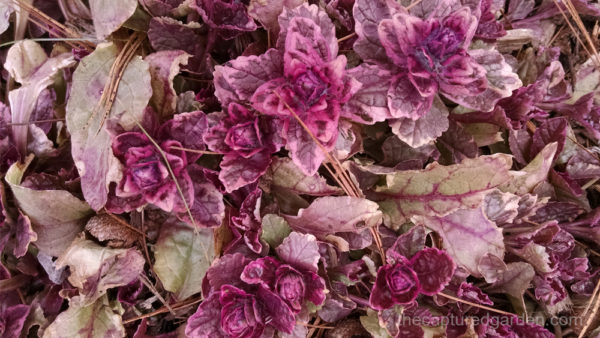
Spring for many people means the exuberant blooms of daffodils, tulips and crocus. As much as I love these flowery spring harbingers, I am a bigger fan of the subtle foliage players in my garden. The ajuga with its dark pinks and purples can rival any tulip.
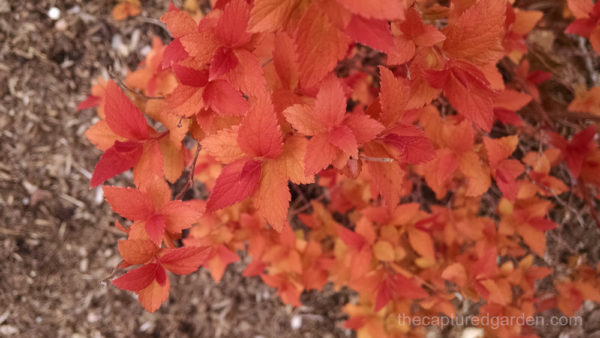
The screaming neon leaves of Spiraea ‘Candy Corn’ can stop traffic as well as any drift of daffodils.
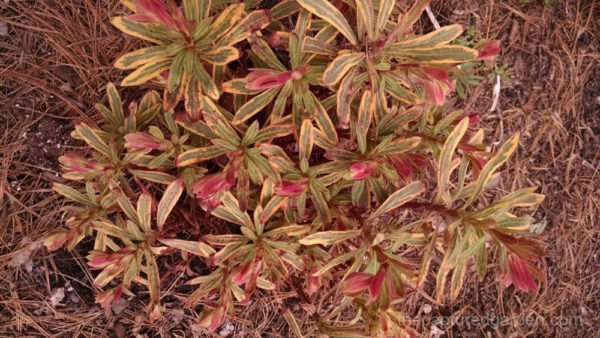
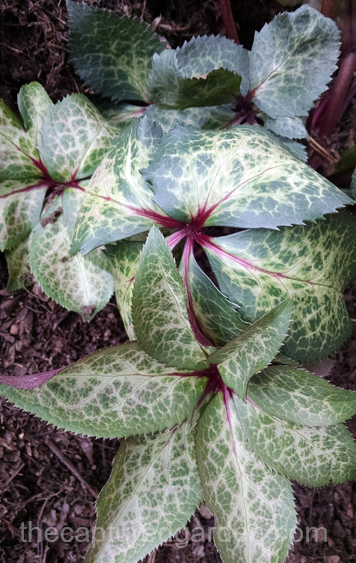
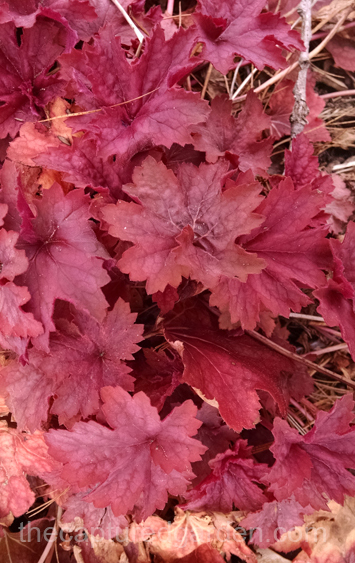
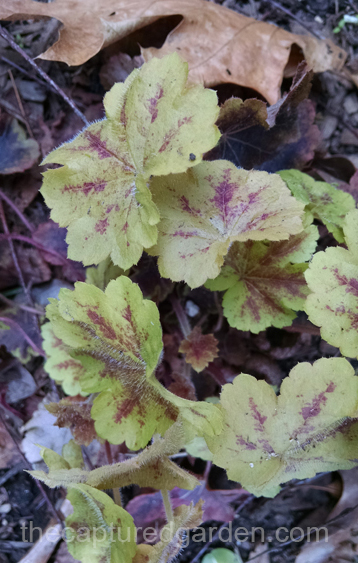
The euphorbia, hellebore leaves and heuchera are as beautiful as any flowering bulb. Best of all these foliage stars will still be looking good a month from now, whereas the daffodil foliage will be browning and driving me crazy.
Is Your Garden Alive?
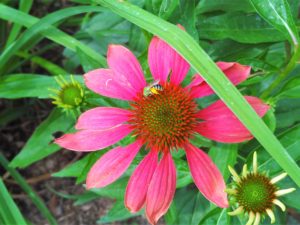
I love sitting in my garden. It’s my happy place. I enjoy a cup of coffee or glass of wine and I observe. The chickadees and titmice scold each other in the birdbath. The chipmunks play hide and seek under the hosta leaves. The hummingbird hovers just out of reach as he sips nectar from the Spanish flag vine that rambles over the arbor. My bees line up along the moss on the stepping stones to drink. Up the hill I hear the pileated woodpecker no doubt working on the dead tree. Occasionally a snake will slither by (which has taught me the art of the silent scream). My fountain gurgles gently and there is nowhere in the world I would rather be.
Contrast my garden with one that belongs to one of my neighbors. The property is beautiful, pristine even. Not a leaf out of place. The guys that do the lawn make sure of that. They come at least once a week to “mow and blow.” The grass is always green and weed-free, unlike my lawn that sprouts the occasional clover and dandelions. Funny thing is I never see any sign of life there. Either from humans or animals. For all the time my neighbor spends on the upkeep of the property I have never seen him or his family actually sitting outside and enjoying it. In the same way, I do not notice birds or butterflies in his garden. Maybe the pesticide smell keeps them away. In my opinion his landscape is dead on arrival.
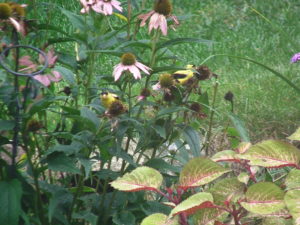 What about you? If you stand in your garden do you hear anything? Is your garden alive? If not there are some easy steps you can take to resuscitate it. Plant native plants that attract beneficial insects, pollinators and birds. Native Plant Trust has a great website. Leave some perennials standing over the winter as the hollow stems can be nesting sites for pollinators. Leave a few leaves as well; they not only shelter salamanders they can increase soil fertility. Have a small pile of brush and twigs for nesting birds like cardinals. Lighten up on pesticides or don’t use them at all.
A garden is a living, breathing thing. At least it’s supposed to be.
Follow Us!