
Bark.
It is so tempting, when designing a garden, to start with the pretty stuff. You know, the flowers that captivate us with their colors and fragrance. While there is nothing wrong with beautiful flowers, a good design must start with the bones. Especially in New England where winters can seem long. Trees are a beautiful asset to the winter landscape and, like bones, can hold things together.
Those with beautiful bark are especially welcome in my garden designs. Consider the Japanese maple (Acer griseum). I have one in my garden and sited it just so its exfoliating cinnamon-colored bark could be backlit by the setting sun. Another beauty, Japanese stewartia (Stewartia pseudocamillia), has multi-colored bark, as well as camellia-like summer blooms and reliable red fall color. Coral bark maple (Acer palmatum) is another winner for the winter landscape with bright red stems that glow after it drops its golden-yellow and crimson leaves in autumn. The high-gloss, coppery-brown bark of Tibetan cherry (Prunus serrula) makes quite a statement in the winter landscape.
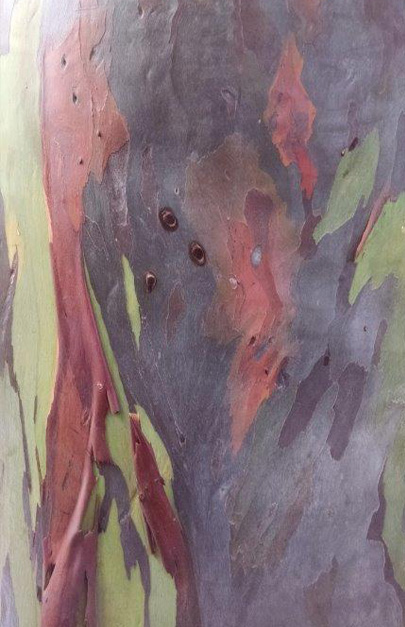
Other trees with interesting bark include Snakebark maple (Acer davidii), Japanese red pine (Pinus densiflora), and American sycamore (Platanus occidentalis) – although you will need lots of room as this one gets BIG. I think the most amazing bark I have ever seen is the Rainbow eucalyptus (Eucalyptus deglupta); it took my breath away at the Miami Beach Botanical Garden. Unfortunately it is not hardy in our zone so you will have to plan a trip to Florida to see it yourself!
My battle with social media.
My niece Anna and I play a game where we ask, “Would you rather?” type questions. My dilemma with social media, i.e.: Facebook, Instagram, Twitter, etc., reminds me of that game and comes down to this: Would you rather be famous? Or do what you love?
I have learned, as a business owner, that social media can become a beast. One that needs to be fed…constantly. The problem with that is I am a very small business with only 3 employees (me, myself, and I). Any time spent on social media is time spent away from bookkeeping, marketing, office work, not to mention actual gardening. Do I want to pursue “likes” in the hope, one day, of getting products to sponsor me? Do I really want to be an influencer? The short answer is no. That might be fine for some, but I have found the deeper I get into social media the more all-consuming it becomes. I had one fellow gardener confess “I am addicted to this.” And she’s good at it with lots of engaged followers but how? She is a small business owner like me and has limited time so how can she keep her business going AND the beast fed? She has hired a company to run her social media platforms. That company will engage with followers, like and comment. This bothers me.
In an age where things are so often not what they seem I yearn for authentic. I want to be real. (For a look at an authentic post click here) Do we present ourselves as real while someone else is behind the curtain pulling the strings? Is that honest? If someone takes time to comment on one of my posts, shouldn’t I be the one replying? And honestly, I would rather have my hands in the dirt then glued to my phone.
I will probably never be an influencer. That’s okay – I’ll be a gardener.

Got grass?
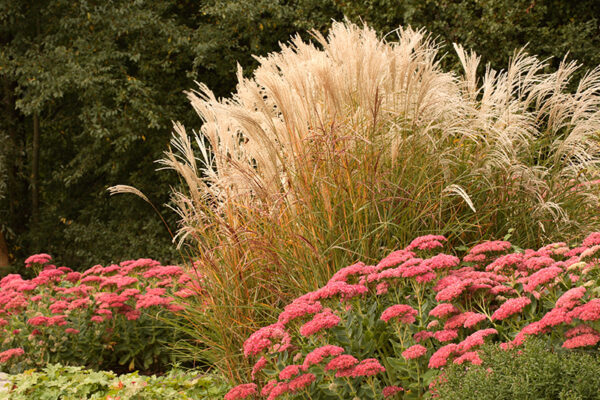
No, I am not talking about cannabis, although with dispensaries on every corner it seems like it would be easy enough to get. I am referring to ornamental grasses. To me they are the stars of the fall garden. They are very low maintenance and bring excitement and movement to the garden during a time when many plants are fading out. With different growth habits, sizes and colors, there is an ornamental grass for any garden. Maiden grass (Miscanthus) features plumes that are typically silvery, or pink-tinged. Some Miscanthus can grow to be over 6 feet tall. These are especially good in a privacy border. Of course, there are also dwarf varieties, like ‘Little Kitten’, and ‘Adagio’. Switchgrass (Panicum) tends to be more upright and features dangling seed heads which are beautiful when backlit by the autumn sun. Feather reed grass (Calamagrostis) ‘Karl Foerster’ is a tried-and-true performer with a narrow upright habit; it is also one of the first grasses to green up in the spring. This is important as many grasses are considered “warm season” and need the heat of summer before they really perform. Little Bluestem (Schyzachyrium) is a wonderful columnar native grass; I especially like ‘Standing Ovation’ – it’s blue-green blades turn a lovely wine red in fall.
Most ornamental grasses require full sun but there are a few that can tolerate some shade. If your garden is sun-challenged try planting northern sea oats (Chasmanthium latifolium), Japanese forest grass (Hakonechloa) or sedges (Carex).
If you want a grass that makes you feel better this fall skip the dispensary and head to your local nursery.
Hugelkulture.
This time of year I see lots of leaf bags filled with sticks, branches and leaves waiting to be picked up by the trash guy. Instead of that why not try hugelkulture? Hugelkulture, pronounced Hoo-gul-culture, means hill culture or hill mound. It’s a very simple method of gardening which involves layering logs, branches, leaves, grass clippings, cardboard, and compost and then topping with soil before planting. It’s the ultimate no-dig gardening.

There are many benefits to hugelkuture. For one the decaying logs provide long-term nutrients to the soil. In addition, the logs produce heat as they decompose, basically creating a warmer microclimate, which will allow you to garden longer into the season. Compaction is a problem that is avoided with hugelkulture because as the logs and branches break down they increase soil aeration. Decaying wood also acts like a sponge and means water is stored and released as needed. Less watering is a bonus as summers heat up and water bans are implemented. Because hugelkutlure creates a hill garden it is easier to harvest – no bending required. This is a benefit I am appreciating more and more as I get older!
I have a steep hill behind my garden that goes down to the street. In my own way I have been playing with hugelkulture (or at least trying to level things out). I threw some logs in at first then added branches, then various waste from client jobs (evergreen trimmings, pumpkins from fall, old plants, etc.) Threw in some grass clippings, chopped up leaves and then more plant waste. Once the area is level, I will add soil and plant.
If you try hugelkulture you will save so much money on leaf bags you can buy more plants!
Power Couples.
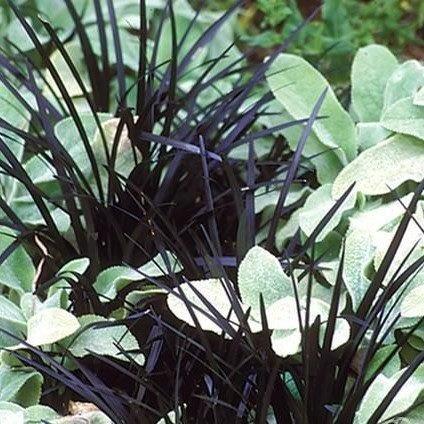
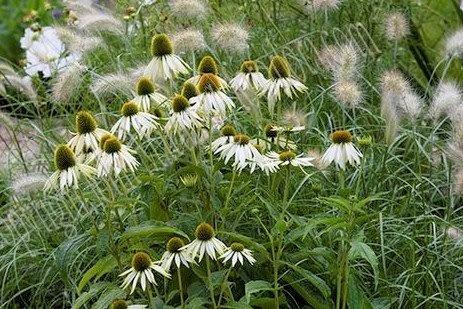
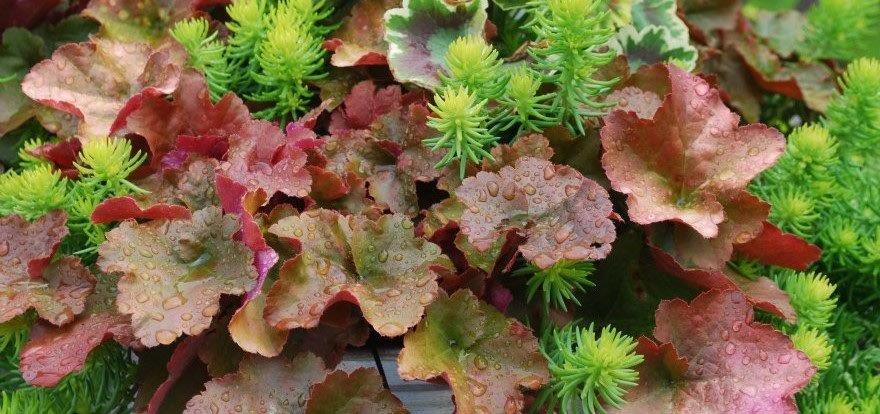
I have a presentation with the same name and in it I share perennials that work well together, not unlike the Power Couples seen in Hollywood and business. Fall is a great time of year to assess your garden and see where there might be areas that could use a little tweaking. The trick with matchmaking, in this case creating your own Power Couple, is to make sure individual plants will work well together. They must be enough alike – have the same light and moisture requirements, for example. But they should also have differences. It’s the differences that will provide the excitement. For instance, a daisy shaped flower contrasted with a spike, or a finely textured plant contrasted with a coarse texture.
In a successful Power Couple one member is not going to take over – each hold their own but bring something a little different to the table. If you are looking to create a fall Power Couple and you have sedum in your garden, why not introduce some maiden grass, Miscanthus? The complimentary colors and contrasting textures are beautiful. ‘Redhead’ is another wonderful ornamental grass that would be a great partner. If you have monkshood, Aconitum, in your garden consider pairing it with the yellow finely textured fall foliage of blue star, Amsonia hubrichtii.
I love playing matchmaker in the garden and I bet you will too.
Click on image below to see plant names


Follow Us!