
Biophilic Design. Duh.
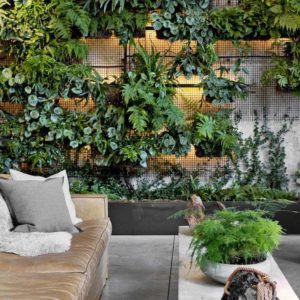 You may have heard the newest buzzword in design circles: biophillic design. If you haven’t heard of it chances are you have seen it in use. Biophilic design seeks to connect our inherent need to affiliate with nature with the modern built environment. Currently 54% of the world’s population lives in urban environments. That number is expected to rise to 66% by 2050. Generally humans spend 93% of their time inside, separated from natural elements.
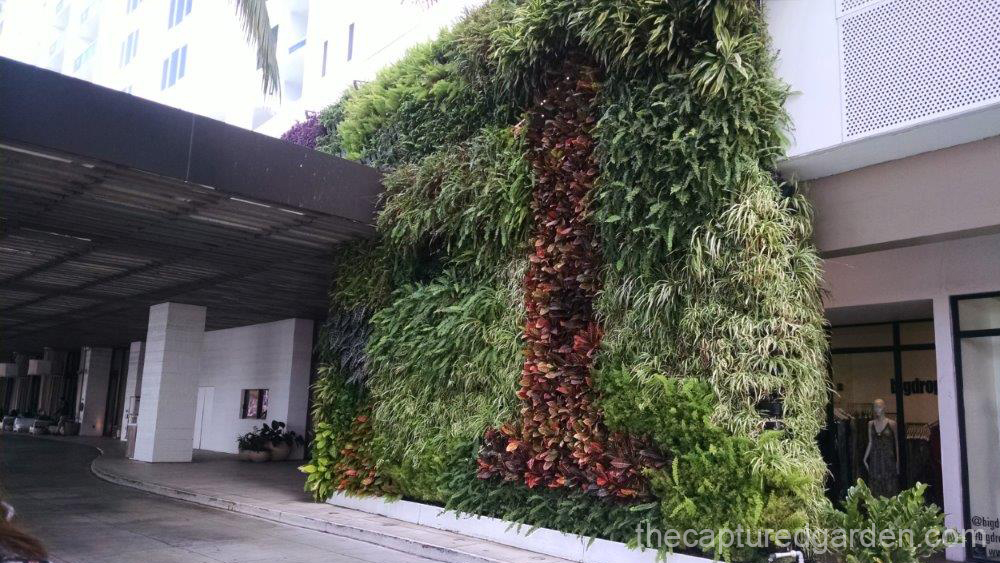
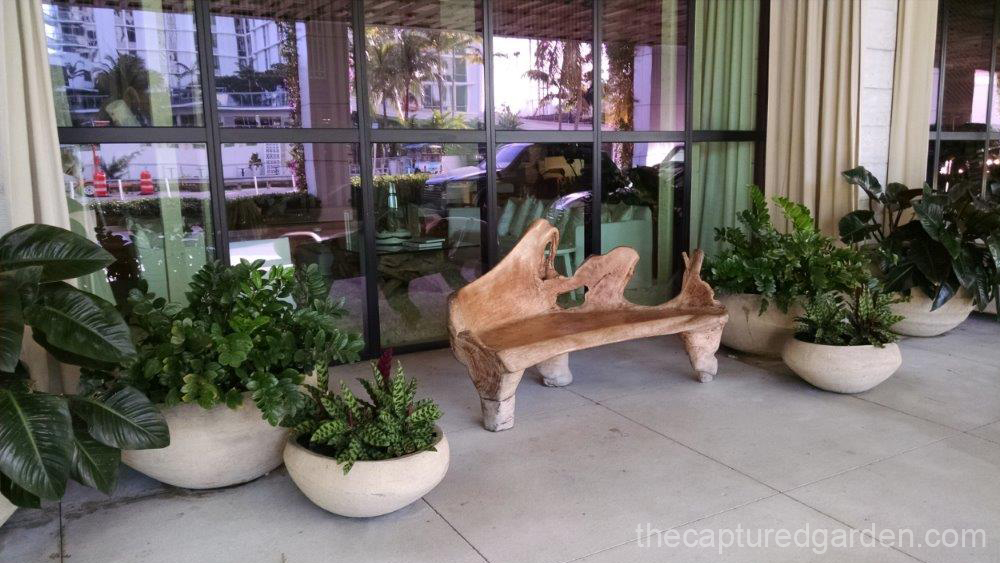
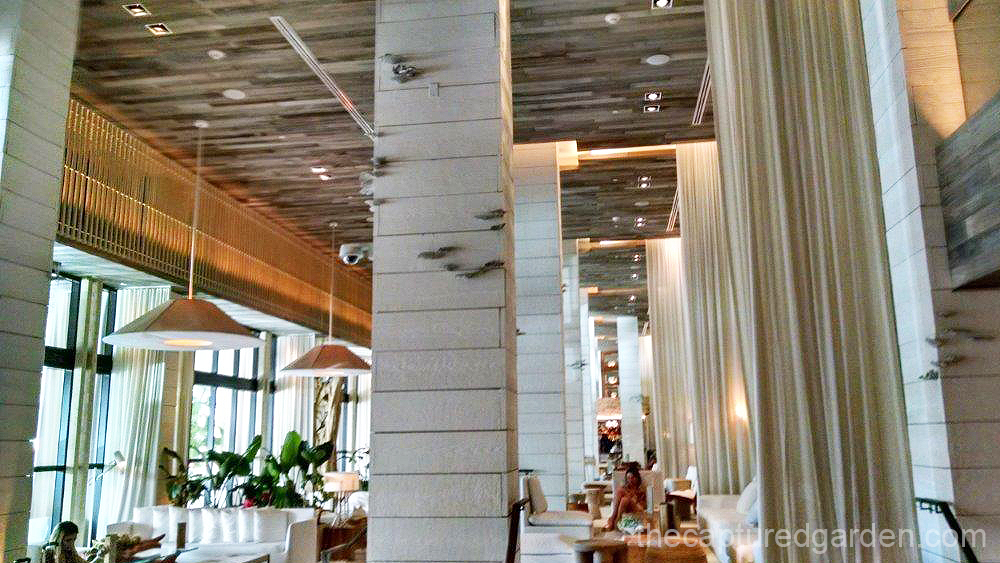
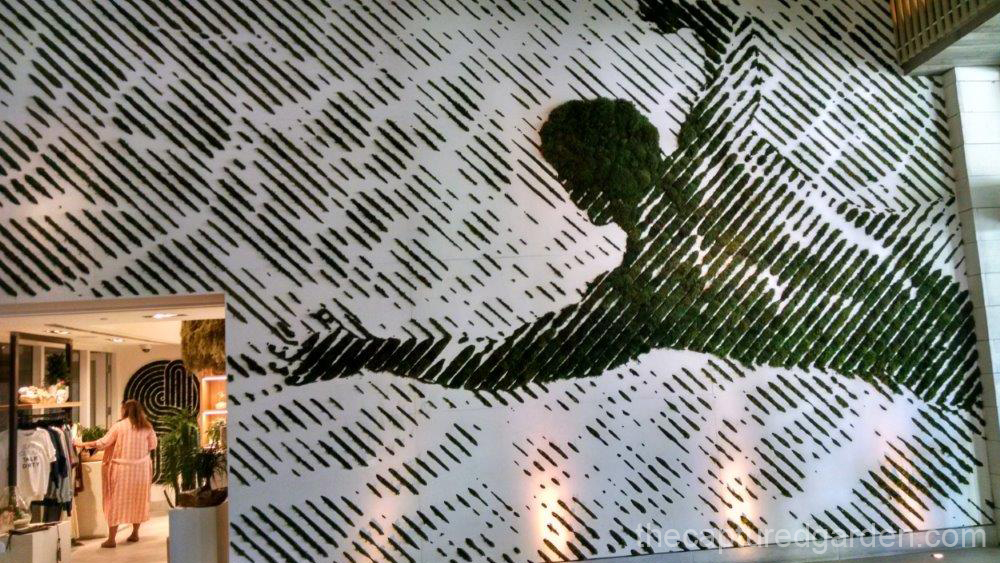
To me, this sounds sad. I am grateful that my business allows me to be outside for so much of my day. During the busy season I am out the door at 7 and not home until after 6. All that sunlight, vitamin D, birdsong and breezes means that most days I am in a pretty good mood. And guess what? Being out in nature does that to you. That’s why “forest bathing”, which started in Japan and encourages quiet time spent in the woods, is so popular. Biophilic design is just another way of bringing nature inside (where unfortunately we spend so much of our time). Houseplants, green walls, and water features can make a sterile office environment feel more like the outdoors. Biophilic design can also be used indirectly – by hanging a large naturescape on an office wall, for instance. Using natural wood elements is another hallmark of biophilic design. During a recent trip to Miami I was blown away by the way this whole concept was incorporated into 1 Hotel in South Beach. (See gallery below)
By using natural elements in our environments we can reduce stress, improve cognitive function and enhance mood and creativity. Who knew? Well, apparently my mother, who must have been way ahead of her time. After all wasn’t she constantly telling me to, “Go outside and play”?

My Sally Field Moment.
 “You like me, you really, really like me.” Like Sally Field when she accepted her best actress award for Places in the Heart, these were my first thoughts upon opening the report on my latest newsletter. A great open rate had me basking in the adulation of a million adoring fans – okay maybe a few thousand but still I felt acceptance and love as my audience clicked through my newsletter. After all, my newsletter was a labor of love. I spent hours trying to create material that was relevant and important. I know all too well how much spam comes through daily and I wanted to make sure that everything I shared was important and would be found to be, in some way, helpful. Favorite plants. Things to do in the garden. Problematic insects. And of course the occasional rant. All woven together to give my subscribers 10 minutes or so of gardening inspiration.
And then I looked at the ‘Unsubscribed’ numbers. Five! What! How could they? Didn’t they like me, really, really like me? Wasn’t my content helpful, insightful? As I looked at the reasons they unsubscribed I was puzzled. Some said they had not signed up for my list. Yes, they had and I had a signup sheet to prove it but in their defense it had probably been a while since I had sent out a newsletter and maybe they had forgotten. “No longer interested” – ouch. Why? But then I came across one subscriber who really didn’t like me. She said that one of my favorite plants was not native. And then she went on and on. True, I had extolled the virtues of aralia ‘Sun King’; it was named by the Perennial Plant Association as the Plant of the Year in 2019 – and my bees love it. Perhaps it’s not native in my area, but I find it a truly garden-worthy addition. I do not use only native plants; I find there is a balance. As a beekeeper I try to make sure my garden is in harmony with nature but I also know that there are some things that I like that might not be considered native and since I am the one paying the bills I incorporate them. It’s all about balance, in my humble opinion. Often we get on such soapboxes that we end up throwing out the baby with the bathwater.
I will continue to garden as I garden and share my opinions as I feel them. It is nice to be liked and appreciated but that is not the end goal. And while some of you like me, you really, really like me the rest might not. And I’m ok with that.
To Be Real
 Those of you like me who grew up in the 80’s might remember the famous disco song with the same title. My friend Sue and I danced many a night away in our high heels and bright blue eye shadow to just such music. This blog is not about disco, however. Although I am now humming under my breath.
The title of this blog refers to the way social media encourages us to be “unreal.” Pictures and videos of perfection and success clutter the internet. Thanks to editing and filters things always look good. Of course we are careful what we share. Only the highlights. Never the “behind-the-scenes.” I wonder if the implied perfection of those we “like” or “follow” does not cause us to become even more insecure. We compare ourselves and are found lacking. How sad.
To be real means showing the failures as well as the successes. It means sharing the story of the client who didn’t like your work. It means posting a picture of what your office really looks like. It means being honest when you are feeling overwhelmed. Admitting that you completely forgot the container for your container gardening presentation (true story, actually happened to me).
If we are real we may find that others will join us. And rather than a competition for who can be the most perfect we can encourage each other in our imperfections.
One pot. Three ways.
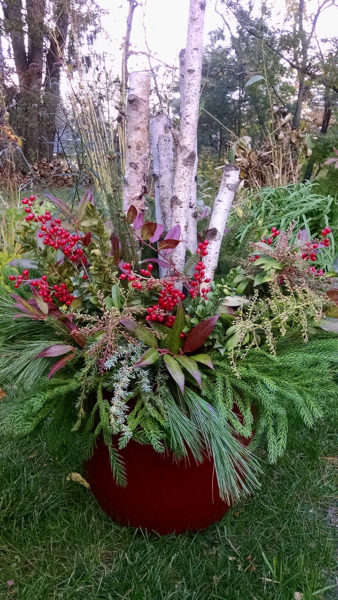
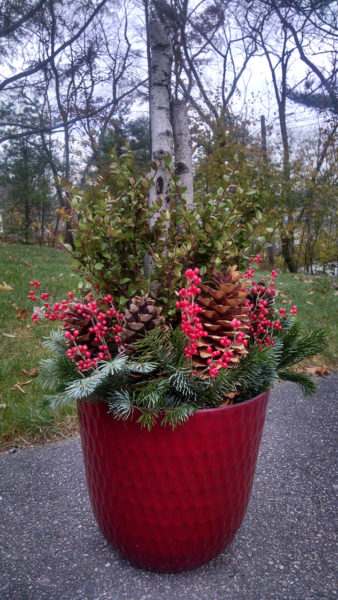
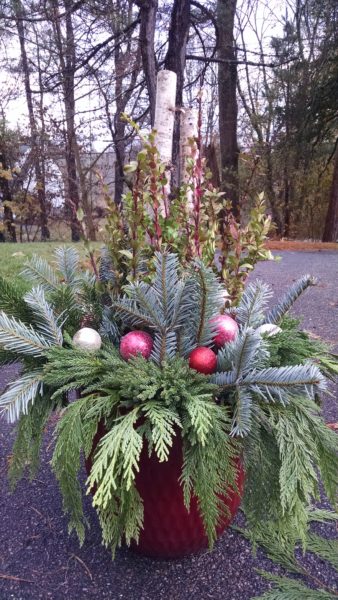
This winter I created many different containers for various Garden Clubs. During one particularly busy week I challenged myself to use similar materials without creating the same container. In this instance I had a beautiful bright red pot, birch poles and greens. By using different design aesthetics I was able to put together three pots that, while they had similar elements, could not have been more different.
First Pot
The first pot was exuberant. Birch poles took center stage and were surrounded by lush greens in many textures. Cryptomeria and pine provided nice contrast. Artificial red berries echoed the reddish tint of the leucothoe, as well as the stems of the pieris.
Second Pot
The second pot had a more contemporary feel due to the nature of its linear, segmented parts. Like the first pot, the birch poles were in the center. Next was a very tight circle of red huck. The red huck was slightly shorter than the birch. Extra-large pine cones held upright provided the next level. Working my way down I used deep green Nordmann fir, and stood it upright. I knew that the green would provide great contrast at the edge of my pot since green and red are opposite each other on the color wheel. I needed to somehow tie the color of the pot into the arrangement so I added some artificial red berries.
Third Pot
The third pot combined the linear feel of the second pot with the lushness of the first. Red huck and silver fir stood tall and straight encircling the birch. Then the softness took over with cryptomeria and cedar draping over the edge of the pot. To make things even more dramatic I added some pretty frosted ornaments. The silvery white ones picked up the colors of the silver fir while the reddish complemented the container.
It is so fun to see how a container’s look can be changed just by using its components in different ways. If you haven’t tried mixing things up a bit, I highly recommend it!
Closing doors. Opening windows.
It has been an honor and privilege to work with Tracy at PineStraw for the last nine years. Tracy is incredibly talented and understands the creative process like no one else; which is why it was always so fun to create windowboxes for the Wellesley shop and later the Waban location. I knew I could enjoy the freedom to think outside the box. It was equally amazing to work with Anne Tochka’s beautiful window designs. I will truly miss our creative collaborations but as Dr. Seuss once said, “Don’t cry because it’s over, smile because it happened.”
I am looking forward to working with Tracy in the future as she develops her new business, which will focus on home decorating and interior design. Keep your eyes out for Pine Straw Home and Living.
The following pictures are a brief look at some work done over the last nine years. Enjoy!


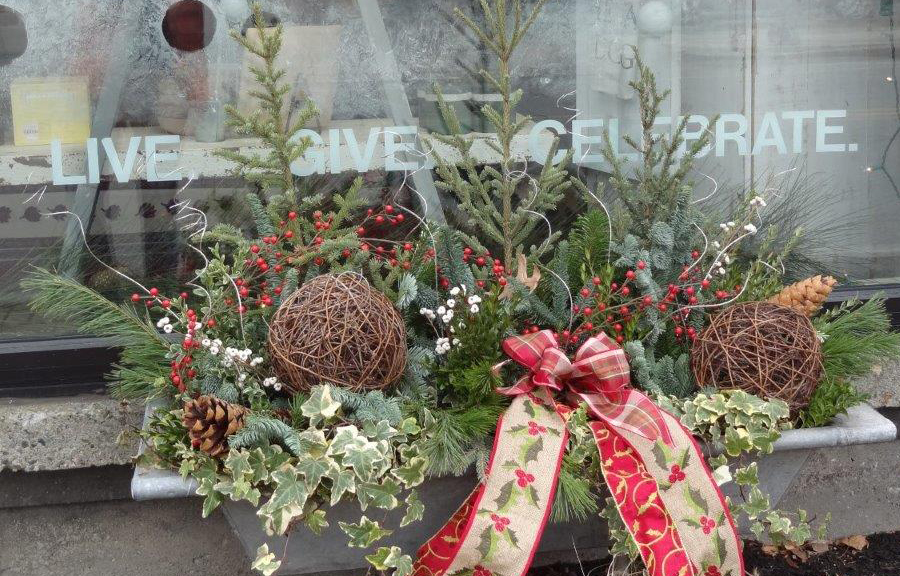
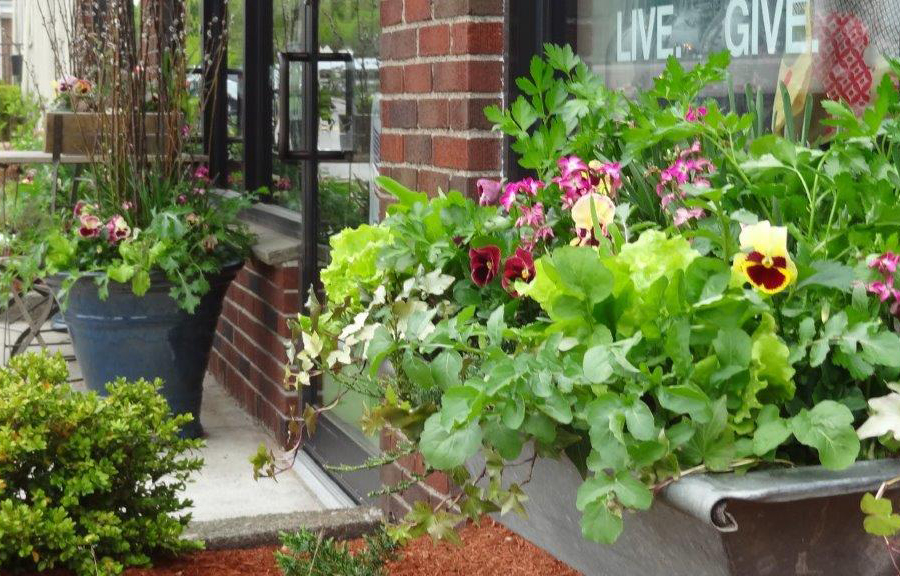
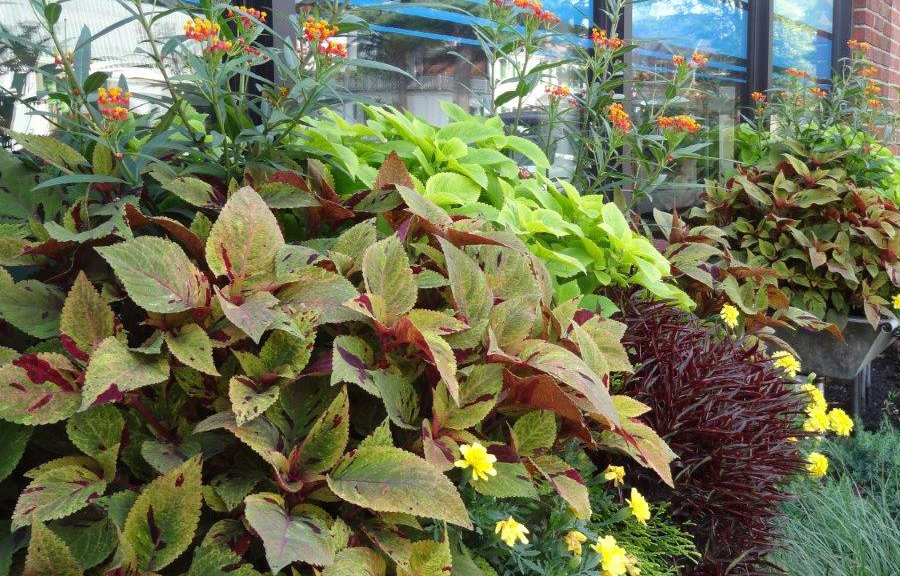
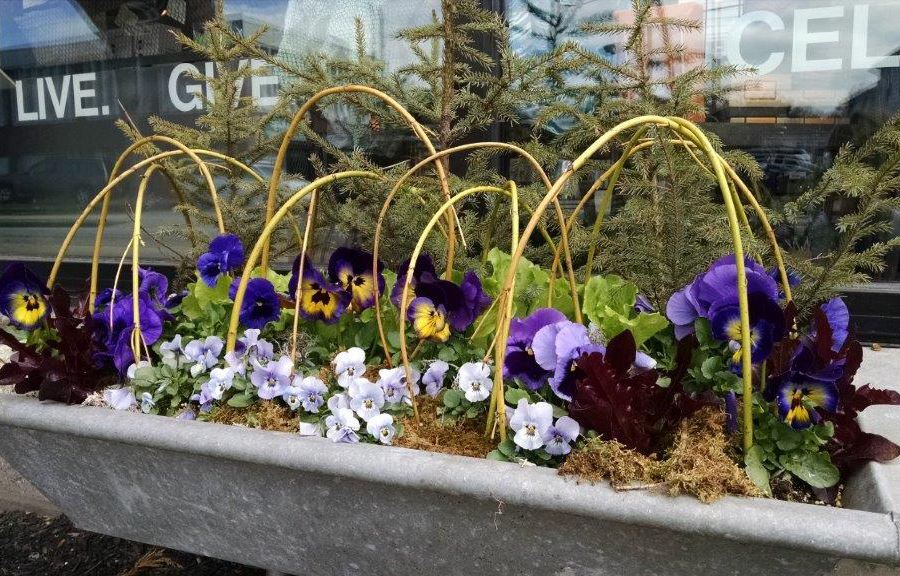
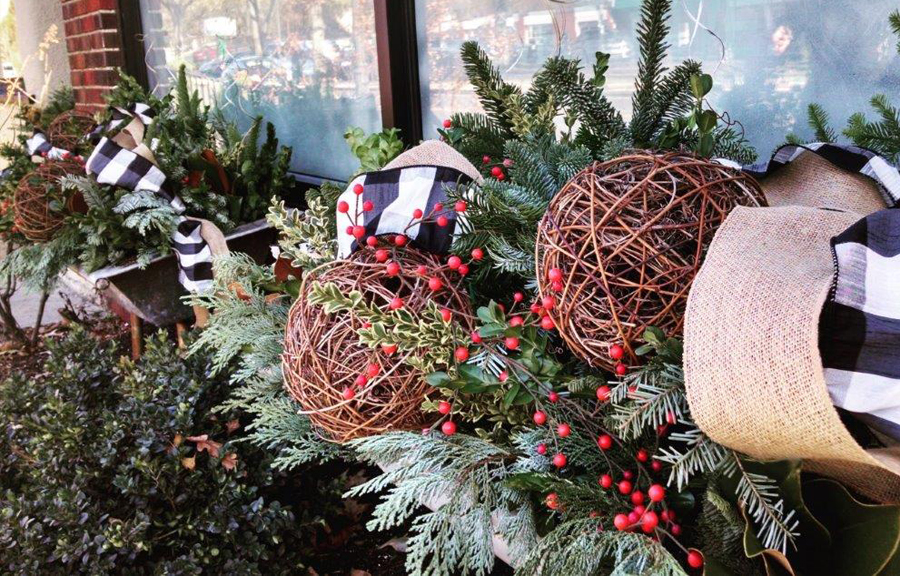
PineStraw in Wellesley will be open until the end of February. The Waban shop is open until April. Shop the goodies while you can!
Follow Us!